
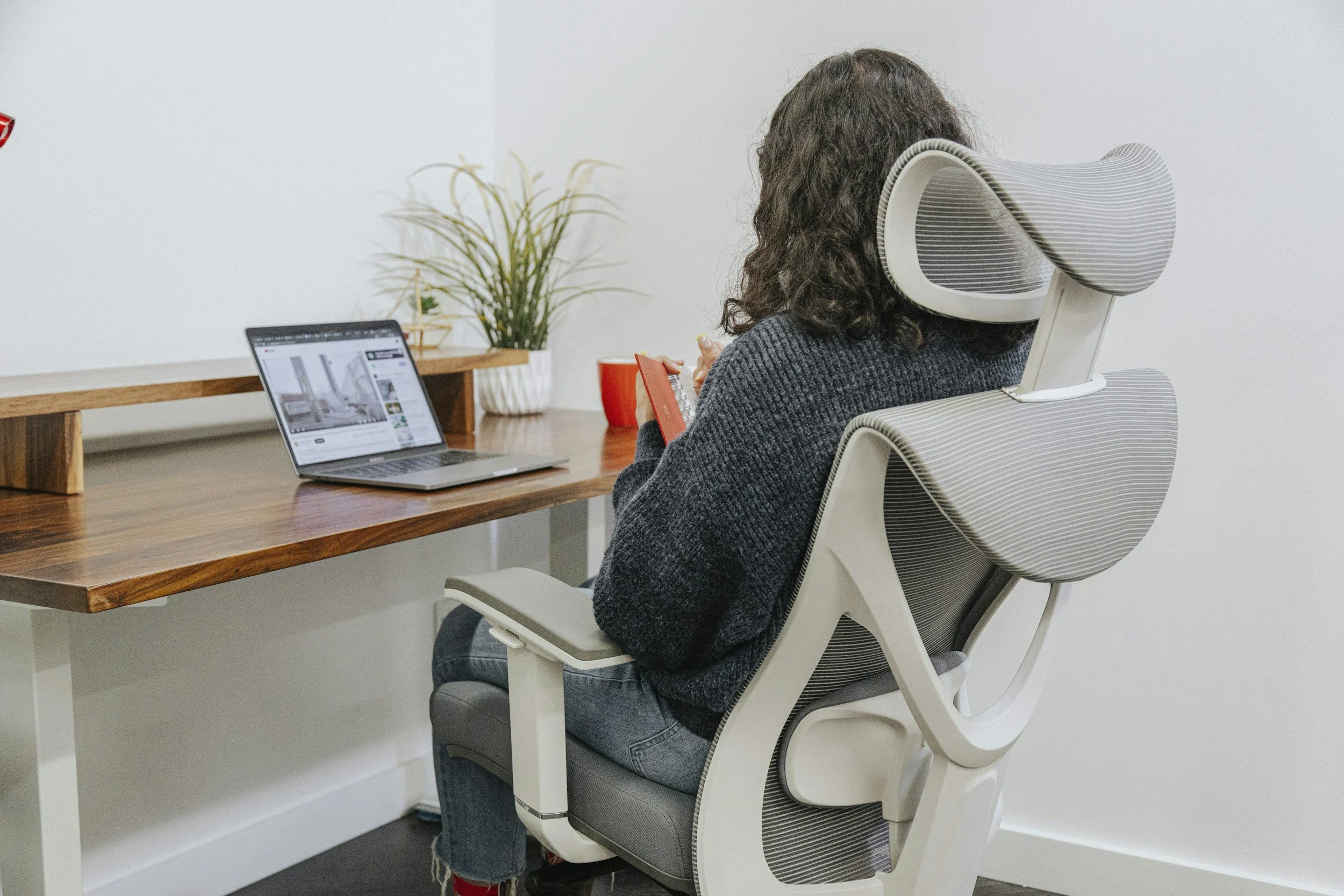
An ergonomic workstation assessment looks at how a person carries out their work, how their workstation and equipment interact with their individual needs, and what changes may help them work more safely, comfortably and effectively. It can be particularly useful where pain, fatigue, injury, disability or a more complex health need is affecting work.
This post explains what an Occupational Therapy workstation assessment involves, how it differs from a routine DSE assessment, when specialist input may be helpful, and what an employer or case manager can expect from the resulting recommendations.
What an ergonomic workstation assessment involves
The assessment considers the person in the context of the work they actually do. The Occupational Therapist looks at posture and positioning, the chair and desk, screens and input devices, the tasks the role requires, how frequently and for how long those tasks are carried out, and any symptoms or functional difficulties reported through the working day.
Where a health condition, injury or disability is relevant, the OT also considers how this affects function. That can include pain, reduced movement, weakness, altered sensation, fatigue, concentration, tolerance of sustained postures or changes in ability at different points in the day. Recommendations may involve equipment, but equipment is only one part of the picture. Changes to layout, task organisation, working methods, breaks, pacing or the pattern of work can sometimes be equally important.
How this differs from a DSE assessment
The Health and Safety (Display Screen Equipment) Regulations 1992 require employers to assess and manage risks for workers who regularly use display screen equipment as a significant part of their work. For many employees, a routine DSE assessment and appropriate follow-up will be sufficient.
An OT workstation assessment provides more individualised input where the situation is more complex. It can be particularly helpful when a health condition, disability or injury affects function, when symptoms persist despite routine adjustments, when someone is returning to work after a significant change in health, or when the employer needs clearer clinical reasoning about possible adjustments.
The difference is therefore not that every employee with a diagnosis needs an OT assessment. It’s more that Occupational Therapy can add value where the relationship between the person, their health, the job demands and the working environment requires more detailed assessment and recommendations.
When to arrange one
A specialist assessment may be appropriate where an employee reports ongoing discomfort or difficulty that has not been resolved through the usual DSE process, or where there is a clear functional issue affecting their ability to carry out the role.
Return to work following illness, injury or surgery is another common reason for referral. The employee’s previous setup or working pattern may no longer meet their needs, and an assessment can help identify practical adjustments and support a planned return. Where an employee is disabled within the meaning of the Equality Act 2010, an employer may have a duty to make reasonable adjustments. An OT assessment can provide evidence about functional difficulties and help identify adjustments that are likely to be effective and proportionate.
Access to Work may also be relevant for some employees. Its eligibility and funding arrangements are separate from the employer’s own responsibilities, so current government guidance should be checked where an application is being considered.
Case managers commissioning support for a client returning to work after injury will recognise the same territory. The assessment sits naturally alongside our vocational Occupational Therapy service, which covers the wider return to work picture rather than the desk alone.
Home and hybrid working
Employers’ health and safety responsibilities also extend to employees who work from home. A home or hybrid workstation may therefore need the same consideration of DSE risks as an office- based setup, although the practical solutions can be different.
Home assessments can be completed in person or remotely where appropriate. The OT considers the available space, furniture and equipment as well as the tasks the person needs to complete. Recommendations should be realistic for the home environment rather than simply recreating an office specification without considering how the space is used.
What you get back
The assessment report sets out the difficulties identified, relevant observations and the recommendations arising from the assessment. It should make clear which changes can be achieved through adjustment of the existing setup or working practices and which may require additional equipment or employer action.
Where equipment is recommended, the specification should be sufficiently clear to explain the features required and why they are relevant to the person. A recommendation for an “ergonomic chair” on its own is rarely enough because chairs differ significantly and need to match the individual and the tasks they perform.
Where relevant, recommendations may also cover task rotation, rest or movement breaks, working hours, pacing, a phased return or other changes to the way work is organised. These should be based on the assessed functional need and discussed with the employer alongside the requirements of the role.
Why it is worth doing properly
Workstation difficulties are often easier to address when the underlying causes are understood rather than repeatedly changing equipment without a clear rationale. A structured assessment helps distinguish between problems with the physical setup, the way work is organised, the person’s individual functional needs and the interaction between them. It also gives the employer a clear record of what has been considered and why particular adjustments have been recommended. This can support informed decision making and provide a useful basis for review if the employee’s needs or role later change.
If you’re looking at your wider premises and general accessibility of your services, rather than individual workstations, then our disability access audits cover that ground too.
How we work
Inclusion’s Occupational Therapists provide ergonomic and workstation assessments for employers, occupational health providers, case managers and individuals. We assess office, home and hybrid working arrangements, depending on the referral and what is clinically appropriate. Our approach combines practical ergonomic assessment with Occupational Therapy clinical reasoning, looking not only at measurements and equipment but at how the person functions across their working day and what the job actually requires.
If you’re new to Occupational Therapy in general, what Occupational Therapy involves is a useful starting point, and adult Occupational Therapy covers the broader service, however if you have an employee who’s struggling at their desk, you can get in touch with us to arrange an assessment and we’ll talk through what would help.